
- What the government is now paying
- What it still costs a restorer
- Where the training actually happens
- Why there still aren't enough of them
- What a club can do about it
- If you are 17 and reading this
- The small print
- Dates for the diary
In last week's round-up of next year's law changes I gave the apprenticeship money two paragraphs and a heading. That is not enough for the one piece of 2026 news that could change who is working on our cars in 2036. The restoration trade has spent a decade telling anyone who would listen that the skills are leaving with the people who have them. I wrote about it myself eighteen months ago, when the answer was a handful of good schemes. The schemes are still there. What has changed is that the government now pays the whole training bill for anyone under 25 and puts £2,000 on the table for hiring them. So here is the whole of it: the money, what it does not cover, where a 17-year-old actually learns to shrink a wing, and what a car club, which is most of you, can do about it.
What the government is now paying
The rules are in the apprenticeship funding rules for 2026 to 2027. They cover England, they run from 1 August 2026 to 31 July 2027, and three things in them matter to a restoration business.
First, if your wage bill is under £3 million a year, counting any connected companies, you do not pay the apprenticeship levy, and that is every restorer I have ever heard of. For a non-levy employer the government has paid all the training and assessment costs for apprentices aged 16 to 21 since April 2024, up to the funding band for the apprenticeship. From 1 August 2026 that runs to age 24. For an apprentice aged 25 or over, you pay 5 per cent and the government pays the rest.
Second, from 1 October 2026 there is a new £2,000 hiring payment for a non-levy employer that takes on a new apprentice aged 16 to 24. New means they have not worked for you for more than 90 days before the apprenticeship starts. It is paid in two halves, which fall due at 90 days and at 365 days, and each only if the apprentice is still employed by you and still in learning. The rules say in plain terms that the payment "is subject to wider policy considerations and we reserve the right to change or withdraw it during the funding year". They also promise at least three months' notice of any change, and that apprentices already eligible keep their payments. Even so, do not build a business on it.
Third, the older payment stays. The employer gets £1,000, and the training provider gets another £1,000, for an apprentice aged 16 to 18, or aged 19 to 24 with an education, health and care plan or a history in care.
The vehicle route is the Level 3 Heritage Engineering Technician apprenticeship, standard ST0571. It has a maximum funding of £26,000 and a typical length of 42 months before the final assessment, though the academy that trains most of them runs it as a 36-month programme. It was approved in August 2018. Sixteen employers wrote it, among them the FBHVC, Bicester Heritage, the Heritage Skills Academy, Jaguar Land Rover, P & A Wood and the Sir Henry Royce Memorial Foundation. It comes in six flavours: aviation, marine, two sorts of steam, vehicle mechanical, and coachbuilding and trim. The last two are ours.
What it still costs a restorer
So the training is paid for. What the government does not pay is the apprentice, and an apprentice is a person who needs feeding. Here is my sum for a small restorer taking on a 17-year-old in January, at this year's rates. It is my reading of the rules, not an official worked example, and your accountant should check it before you do anything.
| Who pays | What it comes to | |
|---|---|---|
| Training and assessment at the Heritage Skills Academy | The government, up to £26,000, as it has been for 16 to 21-year-olds since 2024 | Nothing to you |
| Hiring payment, apprentice aged 16 to 24, starting from 1 October 2026 | The government, to you | £2,000, in two halves |
| Young apprentice payment, aged 16 to 18 | The government, to you | £1,000 |
| Wages, year one | You | £16,640 advertised to start, a 40-hour week at the £8 apprentice minimum, which becomes £8.31 in April 2027 |
| Wages, years two and three | You | More. Once they are 19 and past their first year the age rate applies: £10.85 an hour at 18 to 20, £12.71 from 21 |
| Employer's National Insurance | Nobody, on an apprentice under 25 earning less than £50,270 | Nothing |
| Block-release weeks at Bicester or Brooklands, nine or so a year | You | Accommodation, travel and meals |
| Workwear and PPE | You | £175 plus VAT, says the academy |
| Supervision | You | Your best person's time, most days, for three years |
The £16,640 is not my guess. It is the first-year wage on a live vacancy for a heritage engineering apprentice at a race and restoration engineer in Aylesbury, posted on 5 November, and it is exactly 40 hours at £8 for 52 weeks. The apprentice minimum went up from £7.55 to £8 an hour on 1 April 2026 and goes to £8.31 next April, so a January starter gets a rise in month four. It applies to apprentices under 19 and to older ones in their first year. After that the ordinary age rates take over. My rough sum for a 17-year-old over three years is somewhere between £55,000 and £60,000 in wages at today's rates, before the April rises.
Against that you have £3,000 of payments, no employer's National Insurance, and by the second year a trainee who is doing paid work on customers' cars. It was never going to be a free pair of hands. And to be straight about what is new: the training bill for a 17-year-old went in April 2024. This year's change is the £2,000 for hiring, plus three more years of age on the free training, which is what matters if the person you have in mind is 23.
Where the training actually happens
The FBHVC set up a charity in 2018, the Federation Skills Trust, to run heritage engineering apprenticeships after the government made apprenticeships employer-led. It grew out of a restoration framework the Federation had built with the Institute of the Motor Industry in 2014, and the IMI's own Level 3 classic restoration diploma has since closed to new students. The training is delivered by the Heritage Skills Academy: mechanical at Unit 90 at Bicester Heritage, coachbuilding and trim in the Flight Shed at Brooklands, where Vickers once built Wellington bombers. If you are going to learn to make a wing, that is the place to do it.
Apprentices are employed from day one and go to the academy on block release, nine one-week blocks a year, Monday to Friday, and the employer gets a report after each one. The programme runs 36 months. The academy took on 26 apprentices in its first year and now takes more than 70 a year. It has worked with more than 300 employers, and ten of them have put at least five apprentices through. In summer 2026 the Trust had 170 apprentices in training and more than 150 had qualified. In 2025, 43 passed their final assessment, 14 of them with a distinction, and 69 are due to finish this year. The academy was Industry Supporter of the Year at the 2025 International Historic Motoring Awards, it is shortlisted for Youth Initiative of the Year this year, and Ofsted rates it Good.
The academy also does the recruiting, which for a two-man firm is the part that matters. It visits to work out what you need, writes and advertises the vacancy, sifts and tests the applicants, shortlists them, and sets up the interviews and trial days. An apprentice who starts at 16 to 18 must have Level 2 English and maths, which is GCSE grade 4 or the equivalent, before the final assessment. Those who start at 19 or over can study them but do not have to pass. Employers set their own bar on top of that, and the Aylesbury one wants both GCSEs at the start.
Why there still aren't enough of them
If the money is there and the academy is there, why is 170 the number? The FBHVC's 2025 National Historic Vehicle Survey counts 1.9 million historic vehicles, 2,700 trade businesses and 34,500 jobs, and values the whole movement at £7.3 billion a year. It also found that 17 per cent of those businesses offer apprenticeships and 45 per cent say they plan to. The gap between the 17 and the 45 is where the apprentices would come from, if intentions turned into vacancies. The survey does not ask what stops a firm that means to from doing it. Cost is the usual guess, but the training has been paid for since 2024, so it cannot be the whole answer.
The other question is one money cannot answer: how many young people want the job? The survey does not measure that. What it does say is that the average historic vehicle owner is now 66, and that 11.9 million adults think there should be heritage skills apprenticeships for young people. Thinking it is the easy part.
It can go badly. A Level 2 thatching apprenticeship was introduced in 2024, and last month the work and pensions minister Lilian Greenwood admitted that it "has not recorded any learner starts", which she put down to the size of the trade, employers' capacity to supervise and a shortage of training provision. Restoration has the standard, the provider and now the money, which makes it one of the best-placed heritage trades in the country. What it does not have is anyone in Whitehall asking whether there is enough of it. When MPs have raised heritage skills over the past two years the answers have been about buildings. In March the DCMS minister Ian Murray said the fully funded apprenticeships give "smaller heritage organisations the opportunity to deliver flexible, affordable apprenticeships in heritage skills and conservation", and in the same answer said no assessment had been made of whether that provision is adequate.
What a club can do about it
This is a website about clubs, and 88 per cent of historic vehicle owners belong to one, so here is where you come in.
- Put the money in the newsletter. Most small restorers hear about funding changes from a customer, not from Skills England. If a member runs a workshop, send them this and the academy's employer page. The hiring payment sits in this year's rules, which run to 31 July 2027, so the sooner the better. There are nearly 500 firms in our restorers directory, and I would bet most of them have never looked into it.
- Look at your own young members. Every club has a 17-year-old who turns up with a parent and asks the right questions. The vacancies are on the government's find an apprenticeship site and on the academy's own, and most ask for GCSE English and maths and an interest. Tell them.
- Nominate someone for Bright Young Sparks. Lancaster Insurance runs it with Practical Classics for 16 to 25-year-olds. Nominations close at 4pm on 31 December 2026. Six finalists each get a £500 Amazon or Halfords voucher and tickets to the show, the winner gets a taster week in the trade with the Federation Skills Trust, and the result is announced at the Practical Classics Classic Car and Restoration Show on 19 March 2027.
- Give StarterMotor a hand. The Bicester charity exists to get under-25s into old cars, with cars for them to drive and a team of young ambassadors who turn up at events. Its general manager Steve Cootes told the FT in February that "if we don't do something about this, it's going to fade away", and it held its first cross-club festival at Bicester Motion in May. It is a small charity and runs on what clubs and owners give it.
- Raise it with the Federation. Karl Carter, who led the apprenticeship scheme, became FBHVC chairman this year, so skills ought to be on the agenda at Club Expo at Gaydon on 16 January 2027. Ask what the Federation wants from clubs.
- Offer work experience. The HCVA has employer guides on work placements, written with StarterMotor, and on apprenticeships, written with the academy, and says the trade's sharpest shortage is in bodywork and trim. A week in a trim shop at 15 has started more careers than any leaflet.
If you are 17 and reading this
The job is three years, employed from the start, with nine weeks a year at Bicester or Brooklands. The Aylesbury job advertises £16,640 a year to start, which goes up in April and again as you get older, and that employer covers your accommodation and travel for the block weeks. At the end you hold a Level 3 qualification that the engineering institutions recognise at EngTech level, and you can do something almost nobody your age can do. You need GCSE English and maths at grade 4, or to get them before you finish.
The Aylesbury vacancy starts on 5 January 2027 and closes on 30 November. There will be others. A vintage Bentley specialist in Hampshire closed one on 1 November. If you are not ready for a Level 3, the engineering and manufacturing foundation apprenticeship is a Level 2, takes eight months, is meant for 16 to 21-year-olds and leads straight on. And if you are 15, write to a restorer and ask for a week in the summer. The worst they can say is no, and most of them are short-handed.
The small print
- These are England's rules. Apprenticeship funding is devolved, so Scotland, Wales and Northern Ireland run their own schemes, and the Bicester and Brooklands training is funded through the English system.
- The £2,000 hiring payment can be changed or withdrawn, with at least three months' notice, and anyone already eligible keeps theirs. This year's rules run to 31 July 2027 and new ones arrive every August.
- Free training for 16 to 21-year-olds at non-levy employers dates from 1 April 2024. August 2026 extended it to 24.
- The 95 per cent rule for apprentices aged 25 and over means a career changer costs the employer up to £1,300 in training over three years, with no hiring payment.
- The ST0571 standard was last updated in June 2022 and its page says it will be reviewed within three years. No revised version has been published.
- Apprenticeships moved from the Department for Education to the Department for Work and Pensions in September 2025. The Minister for Skills is Baroness Smith of Malvern.
Dates for the diary
| When | What happens |
|---|---|
| 13 to 15 November 2026 | NEC Classic Motor Show, Birmingham |
| 30 November 2026 | The Aylesbury heritage engineering vacancy closes |
| 31 December 2026 | Bright Young Sparks nominations close, 4pm |
| 5 January 2027 | That apprenticeship starts |
| 16 January 2027 | FBHVC Club Expo, British Motor Museum, Gaydon |
| 19 March 2027 | Bright Young Sparks winner named, Practical Classics Classic Car and Restoration Show, NEC |
| 1 April 2027 | Apprentice minimum wage rises to £8.31 an hour |
| 31 July 2027 | End of the 2026 to 2027 funding year; starts after this fall under next year's rules |
| 1 August 2027 | New apprenticeship funding rules |
Every rule mentioned here, with a link to the official page that decides it, is in our guide to classic car rules in the UK. If your club or your workshop has taken on an apprentice under these rules, tell me. I would like to write about how it went.
The official sources behind this article
- Apprenticeship funding rules: 2026 to 2027GOV.UK, version 3, July 2026Full funding for 16 to 24-year-olds at non-levy employers, the £2,000 hiring payment (paragraphs 133 to 137) and the £1,000 young apprentice payment.
- Funding rules for apprenticeshipsGOV.UKEarlier years' rules, including the April 2024 change that made training free for 16 to 21-year-olds at non-levy employers.
- Pay Apprenticeship LevyHMRCThe £3 million pay bill threshold, counting connected companies.
- Heritage engineering technician (ST0571)Skills EnglandThe standard: £26,000 maximum funding, 42 months, six options, the employers who wrote it.
- Employing an apprenticeGOV.UKThe step-by-step for a small business taking its first apprentice.
- National Minimum Wage and National Living Wage ratesGOV.UKThe £8 apprentice rate from 1 April 2026 and the age rates.
- Rates and thresholds for employers 2026 to 2027HMRCThe £50,270 apprentice upper secondary threshold for employer's National Insurance.
- Federation Skills TrustFBHVCHow the scheme began and the 2025 and 2026 apprentice numbers.
- Heritage Skills Academy: employersHeritage Skills AcademyBlock release, recruitment on employers' behalf, and what the funding does not cover.
- National Historic Vehicle Survey 2025FBHVC, October 2025£7.3 billion, 34,500 jobs, 17 per cent offering apprenticeships, average owner aged 66.
- Heritage Engineering Technician Apprentice, AylesburyFind an apprenticeship, posted 5 November 2026The live vacancy behind the £16,640 first-year wage.
- Written answer 116074, 3 March 2026UK ParliamentIan Murray on fully funded heritage apprenticeships, and the absence of any assessment of provision.
- Written answer 35390, 26 October 2026UK ParliamentThe thatching apprenticeship with no starts since 2024.
- Education and SkillsHCVAEmployer guides on work experience and apprenticeships.
- Lancaster Insurance calls for nominations for the latest Bright Young SparksLancaster Insurance, 9 July 2026Six finalists, the £500 vouchers, the 31 December deadline and the 19 March 2027 announcement.
- StarterMotor's call to armsBicester Motion, 26 February 2026Steve Cootes on the ageing sector and the ambassador scheme.
Welcome aboard. A confirmation is on its way to your inbox.
Share this article

Related Articles
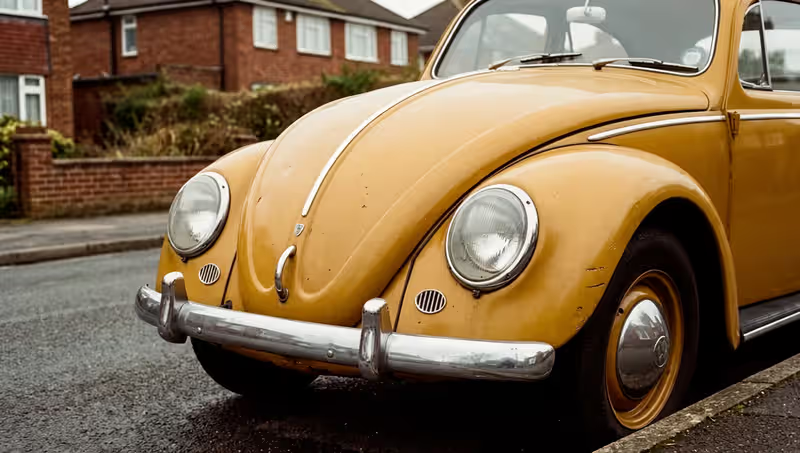
Whose photographs were in this 1953 Beetle's glovebox? The search has reached Takeley
A crumpled set of colour negatives sat in a yellow split-window Beetle's glovebox for half a century. A Bedfordshire restorer has traced the street they were taken on, and now he needs the people.
Read More: Whose photographs were in this 1953 Beetle's glovebox? The search has reached Takeley
Classic car law changes 2027: what's coming for owners, clubs and restorers
The Treasury has confirmed that cars built in 1986 go tax-free on 1 April 2027, but it won't promise anything after that. Here is everything that changes for classic owners, clubs and restorers next year, and a few things that already have.
Read More: Classic car law changes 2027: what's coming for owners, clubs and restorers
DVLA classic car rule changes: the new restoration rules explained
The points system has gone, a replacement shell now means a form rather than a fight, reconstructed classics need 40-year-old parts and a club inspection, and the V765 has just been reissued. What it all means for owners, clubs and restorers.
Read More: DVLA classic car rule changes: the new restoration rules explained