
Table of Contents
- The number everyone will quote
- The British record hiding inside it
- Now read the small print
- We have sat in this room before
- Which brings us to 19 September
- The rest of a very full month
- What I would actually do
The number everyone will quote
Between 13 and 15 August, five auction houses at Monterey Car Week sold roughly $747.9 million of collector cars. Last year the same three days managed $432.7 million. The previous record, set in the giddy summer of 2022, was about $471 million. So this was the best week anyone has had, by a distance that makes the chart look broken.
Totals vary slightly depending on who is counting: Ferrari sold the first production example of its first electric car, the Luce, as a charity lot for $40 million, and whether that belongs in a collector car tally is a fair argument. Strip it out and the week still cleared $718 million. Either way, I suspect a good many people who have spent 2026 being told the classic market is in trouble read the headline and felt quietly cross.
House by house: RM Sotheby's took a record $380 million. Gooding Christie's did about $162 million across two days at Pebble Beach, on a 96 percent sell-through nobody else came close to. Mecum took $114 million, Broad Arrow $97.4 million at 85 percent, and Bonhams, newly relocated to Laguna Seca, had the thin end of the week.
The British record hiding inside it
Here is the part worth pinning to the workshop wall. The second most expensive car of the week was built in Woking.
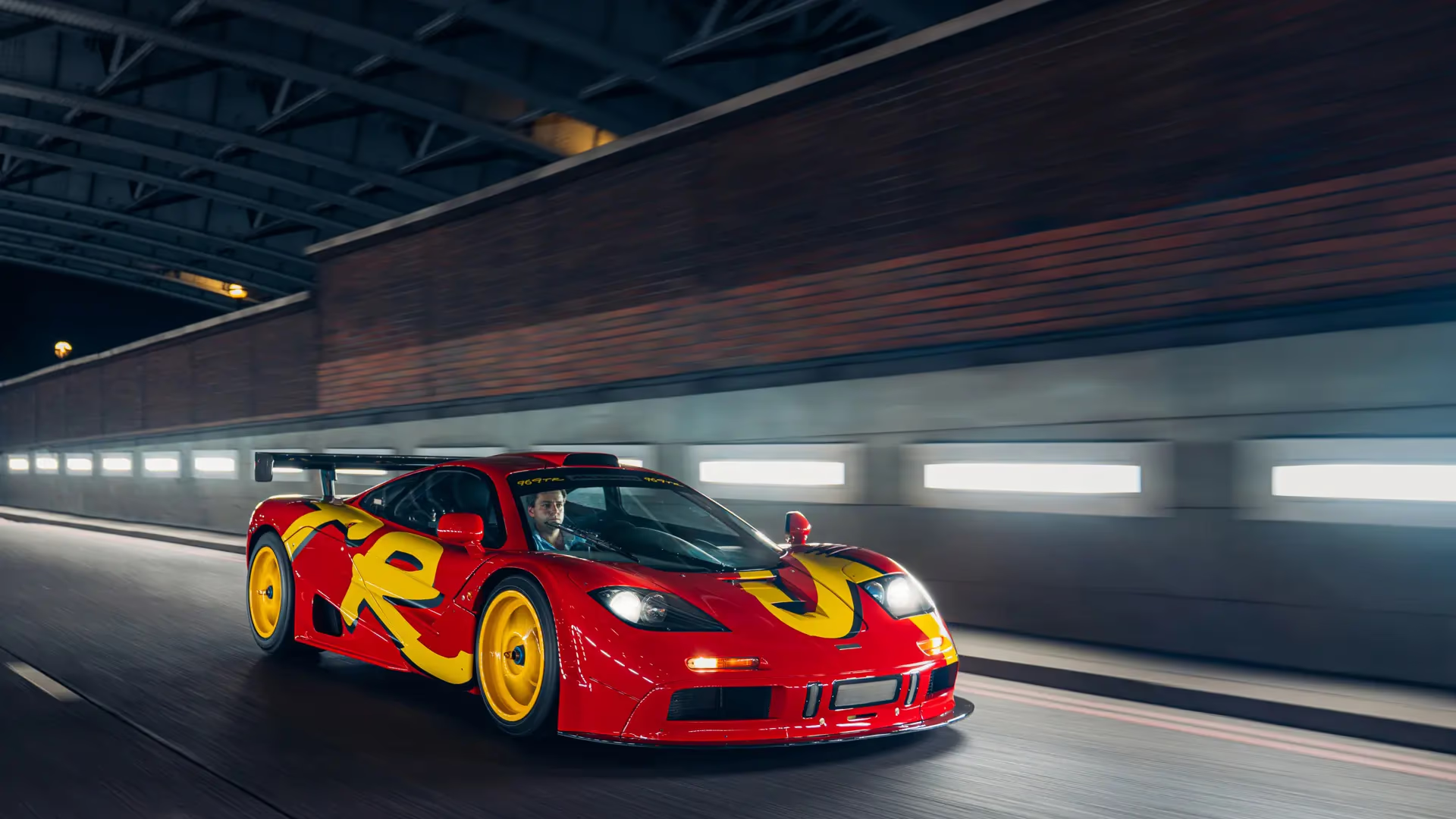
The car was chassis 10R, McLaren's own 1996-specification prototype and one of only two short-tail prototypes alongside the Le Mans-winning 01R. JJ Lehto tested it at Magny-Cours over the winter and David Brabham ran it at Le Mans pre-qualifying, eighth in class. McLaren later converted it for the road, and Nick Mason of Pink Floyd kept it for twenty-five years.
It made $34,655,000 at RM Sotheby's, which is both the most anyone has paid for an F1 and the most anyone has paid for any British car at auction, full stop. Only the 1964 Shelby Cobra Daytona coupe CSX2300 beat it, at $42,905,000 through Gooding Christie's, now the record for an American car.
The other British moment was an Aston Martin Valkyrie Spider at $4,735,000, a record for any post-1970 Aston. Notice what those two cars have in common. Both are modern, and neither has anything to do with the sort of British classic most of us keep in a garage.
The older stuff had a rather different week. A 1962 Aston Martin DB4 GT Zagato, one of the most romantic combinations of letters in the language, failed to sell against a $12 million to $15 million estimate, stalling at a high bid of $11.75 million. A 1931 Bentley 4½ Litre Blower went home unsold at $3.5 million to $4 million. A 1951 Jaguar XK120 roadster made $44,800 against a $50,000 to $70,000 guide.
So Britain set a world record and got its nose bloodied in the same week, which is a fair summary of where we are.
Now read the small print
The overall sell-through at Monterey was 76 percent, exactly what it was in 2025. Of 1,124 lots offered, 271 did not sell. Record turnover on an unchanged strike rate tells you the money did not arrive in greater numbers. It arrived in bigger lumps.
Hagerty's post-sale analysis puts numbers on it. Cars from the 1980s through to the 2020s sold at median premiums of 31 to 38 percent over Hagerty Price Guide values for their condition. The 1950s and 1960s were the only two decades to finish below book, and once you take the Cobra Daytona out of the sums, 1960s cars finished a median 6.2 percent under.
That one is worth sitting with. The decades everyone means when they say "classic car" were the two that sold below their own price guide, at the most expensive auction week in history.
The weak spots were specific rather than general: conventional 1960s road cars, the 1970s Daytonas, ordinary 356s, pre-merger AMG Mercedes, and American muscle that would have started a fistfight five years ago. What sold hard were modern hypercars, gated-manual Ferraris and Porsches, and competition cars with exceptional provenance.
We have sat in this room before
If that pattern feels familiar, it is because we watched a smaller and more polite version of it at Silverstone six weeks ago. When we reported on the late July sales, thirteen cars carried estimates above £200,000 and only four sold at or above their guide, while E-types in the £60,000 to £120,000 bracket cheerfully beat their estimates one after another. The most striking casualty was a freshly built Bentley Blower recreation at £393,750 against a £425,000 to £525,000 guide.
And in California, a real 1931 Blower did not sell at all.
Same instinct, different zeros. Buyers in both rooms paid up for cars whose case makes itself and refused anything that needed explaining first. America has a deep bench of buyers for eight-figure trophies and we do not, so their selectivity produces a record and ours produces a quiet afternoon. Underneath, it is one market in one mood.
None of which rescues our own price guide. Hagerty UK finished 2025 with nearly 80 percent of tracked values down or flat, and Jaguar has had the worst of 2026 with a 21.4 percent fall. The H1 summary we ran in June called it a selectivity year and nothing since has argued otherwise.
Which brings us to 19 September
Britain's turn comes at the Goodwood Revival, and the sale matters more than usual this year because Bonhams has folded its Festival of Speed and Revival auctions into a single event, starting at 10:30 on Saturday 19 September at Chichester. Consolidation concentrates the result: there is no second bite in July to average things out.
The catalogue is still filling but the shape is clear, and it is unapologetically old-British. A 1962 Aston Martin DB4 Vantage Convertible leads at £700,000 to £900,000. A Bugatti Type 35C Grand Prix two-seater is guided at £500,000 to £700,000, and a 1936 Aston Martin 2-litre Speed competition two-seater at £500,000 to £600,000. Below those sit a 1973 Ferrari Dino 246 GTS at £300,000 to £350,000, a 1958 Porsche 356A Speedster at £175,000 to £225,000, the ex-Fred Steiner 1935 Jaguar SS90 roadster at £170,000 to £200,000 and a 1957 AC Ace Bristol at £160,000 to £200,000.
On the Monterey evidence, the pre-war competition cars and the Ace are the ones I would back. The Speedster is the interesting one, since ordinary 356s were a soft spot in California, and a Speedster is not an ordinary 356 but nor is it a race car. If the sale tells us anything useful about the autumn, it will tell us there.
The rest of a very full month
September is the busiest month of the British season, and the auction diary shows it. Manor Park Classics at Runcorn on the 5th. Historics at Ascot, Dore & Rees at the Autumn Classic Festival at Castle Combe, and WB & Sons at Newcastle all on the 12th. Brightwells in Herefordshire on the 16th. Bonhams at the Revival on the 19th. Mathewsons at Pickering and H&H at Kelham Hall on the 23rd, and Anglia at King's Lynn on the 26th. The full run is on our auctions page.
The shows are no thinner. Salon Privé takes over Blenheim Palace from 2 to 6 September, the Concours of Elegance brings 80 rarely seen cars to Hampton Court from the 4th to the 6th, the Beaulieu International Autojumble fills the New Forest on the 12th, and the Revival runs from the 18th to the 20th. Our events calendar has the rest.
What I would actually do
If you are selling this month, take the Monterey lesson rather than the Monterey number. A record week did not lift a car whose only argument was what it resembled. Price against what comparable cars have made in 2026, not against the summer's headlines, and have the history file open before anyone asks.
If you are buying, the 1960s road car market just finished below book at the most expensive auction week in history. Call that what it is: buying weather. The cars everyone wanted in 2022 are the ones you can negotiate on now, while the hot hatches and 1990s Japanese performance cars nobody was talking about keep beating their guides.
If the Revival sale goes the way I suspect, we will spend the autumn watching honest, well-documented, mid-market British cars outperform the trophies above them. For anyone who buys cars to drive rather than to store, that is the most cheering thing to come out of this summer.
Welcome aboard. A confirmation is on its way to your inbox.
Share this article

Related Articles
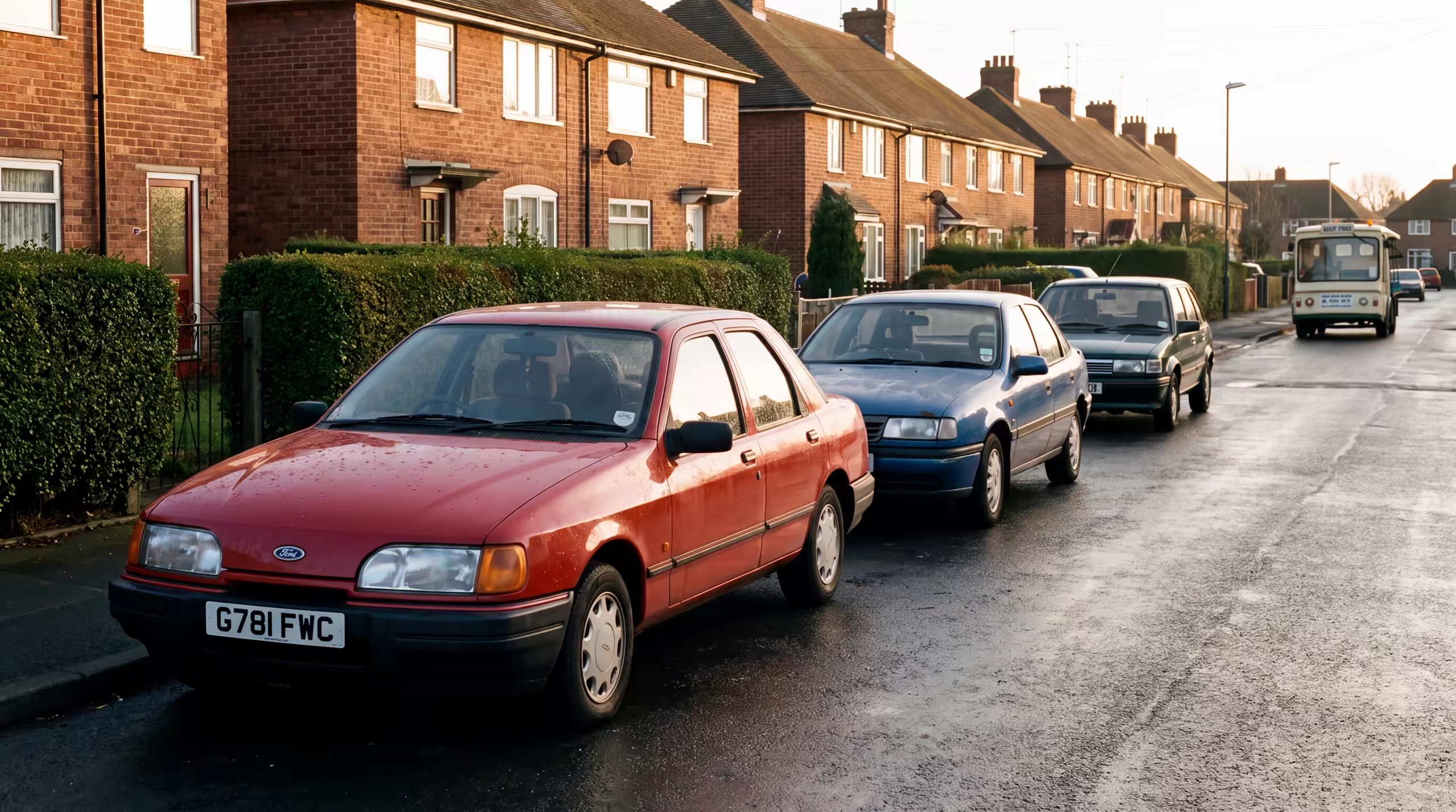
The Cars We Didn't Save: a new book about the classics we scrapped by the million
In 1994 there were 1,231,963 Vauxhall Cavaliers licensed in Great Britain. By early 2026 there were 871 left on the road. Lee Brickley's new book asks where they all went, and it might be the most quietly upsetting classic car read of the year.
Read More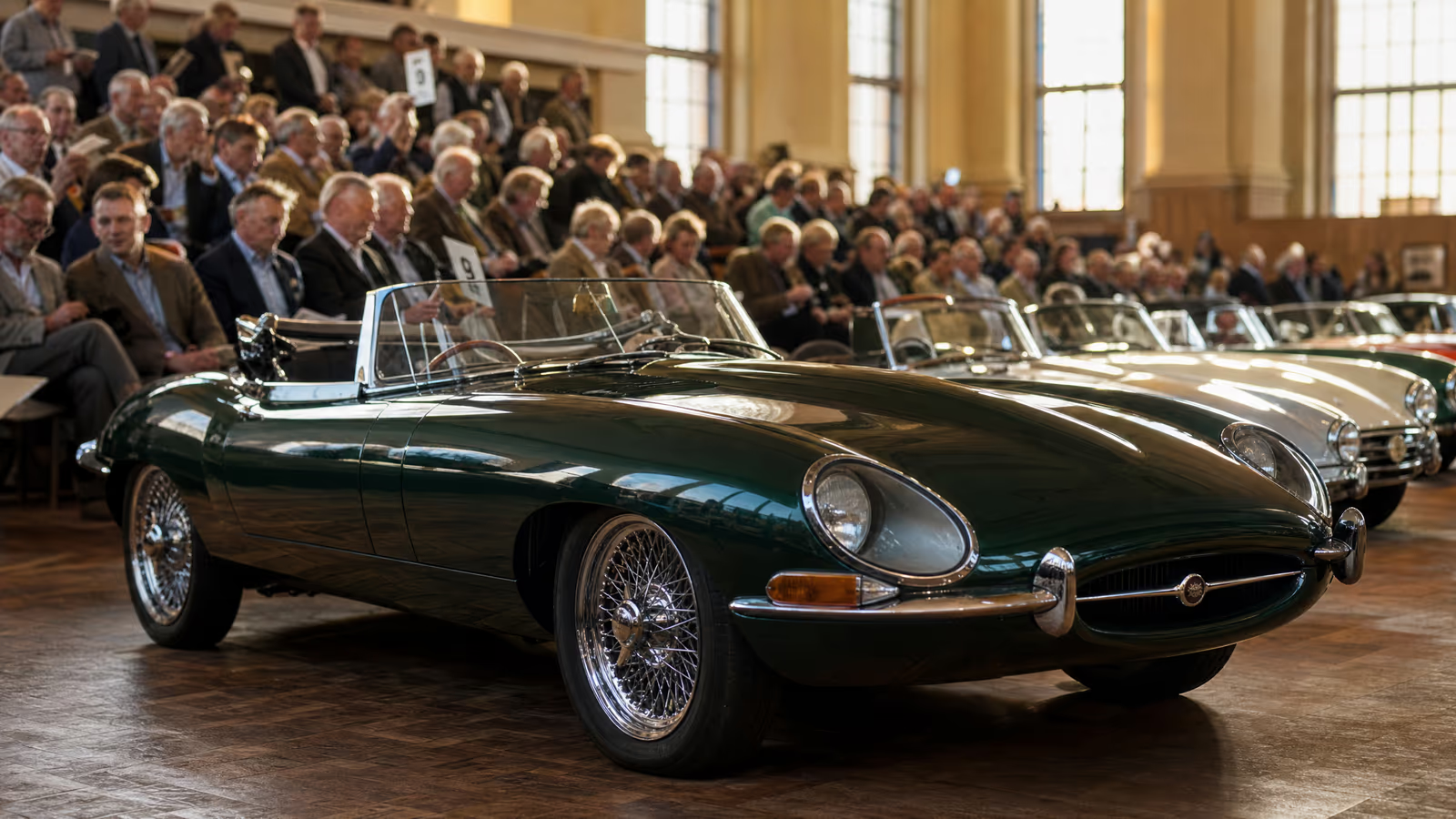
The recreations took the hit: what late July actually paid
I said the Hamilton collection's recreations would sit in a more resilient pool of the market than the seven-figure originals. The room disagreed. Here is what late July paid, and why the real E-types were the ones that held.
Read More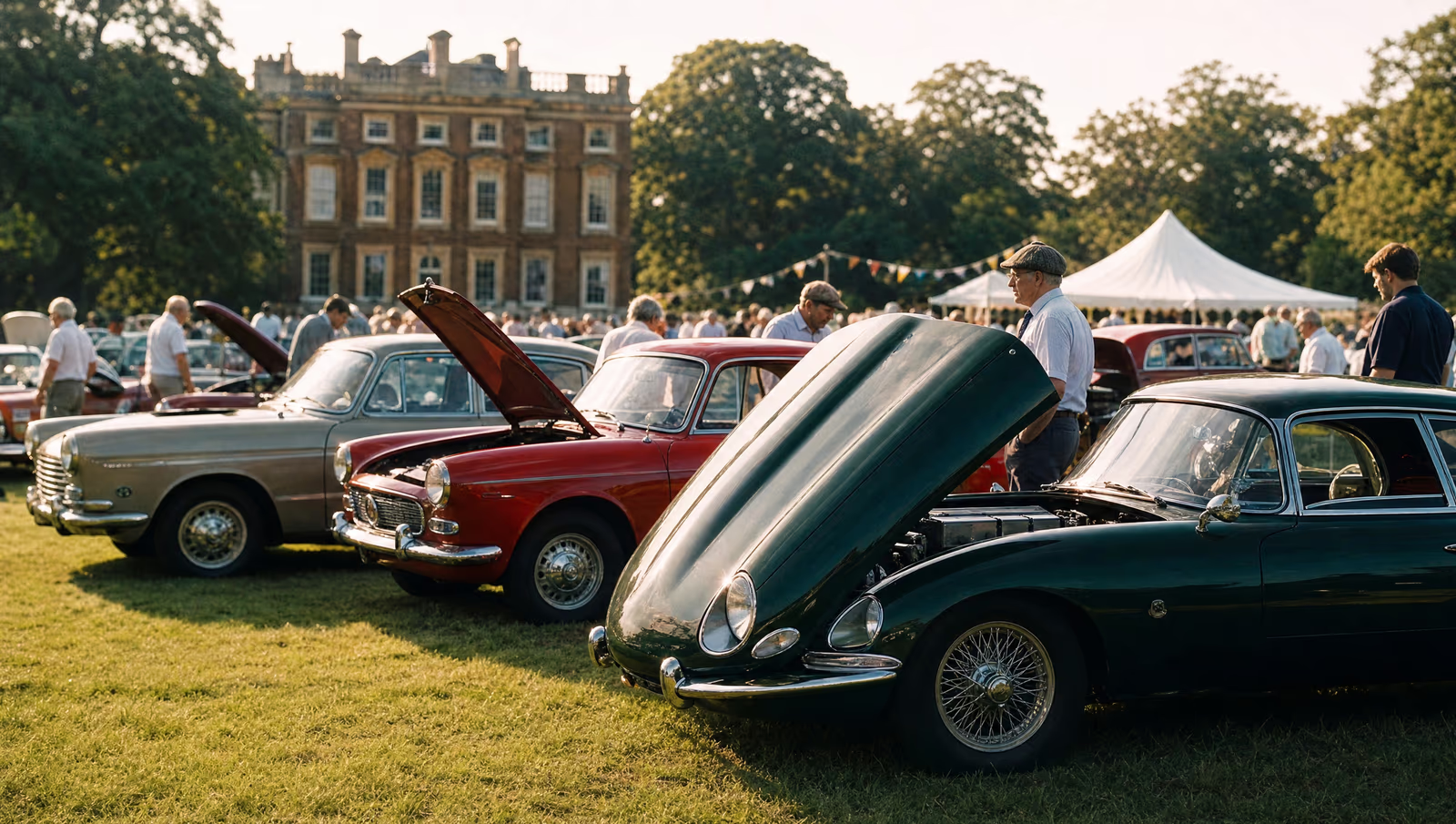
Six classic car events to put in your August 2026 diary
A centenary at Brooklands, sixty years of the HSCC at Castle Combe, Italy taking over Brands Hatch, and a bank holiday weekend with more clashes than any sane person can solve. Here is the August shortlist.
Read More