
Table of Contents
- I said I would report back
- The top of the room went quiet
- Where I got it wrong
- The old Jaguars did the heavy lifting
- The lesson under the numbers
- What is coming over the bank holiday
I said I would report back
Four weeks ago we previewed the late-July fortnight and called it the real test of the 2026 market. Twenty-seven cars from Anthony Hamilton's collection, most of them British, most of them Jaguars, arriving at a brand-new event in the softest Jaguar market since Hagerty UK started keeping score. I made a prediction in that piece. I want to deal with it honestly before anything else, because the room came back with a fairly blunt answer.
The Iconic Sale at the BRDC Classic turned over £8.2 million across the weekend. That is a serious number for a first-running event, and by the headline measure the festival worked. Underneath it, though, the pattern was sharp enough to sting: of the thirteen cars carrying estimates above £200,000, only four sold at or above the guide. The Hamilton collection itself made £1.7 million from nineteen cars sold, against a combined pre-sale estimate of roughly £3 million for the full twenty-seven. Eight lots went home.
The top of the room went quiet
The car that was supposed to lead the sale never sold at all. That 1995 Porsche 911 (993) Turbo Cabriolet, one of fourteen built by Porsche's Exclusive department and one of five in right-hand drive, was guided at £700,000 to £800,000 and found nobody. Rarity that specific is a double-edged thing: the pool of buyers who want that exact car is tiny, and right-hand drive narrowed it again. When it is the wrong week, there is no depth of bidding to catch you.
So the top result of the weekend fell to the Jaguar XJ220 instead, at £506,250 against a £500,000 to £550,000 estimate. Bottom of the guide, but sold, and I would call that a good result for a car of its type in this market. It had covered 3,277 miles in a long ownership, it had been looked after by Jaguar Classic, and the paperwork did what paperwork is supposed to do in a picky year.
The competition sale produced the other genuinely strong moment: a 1985 MG Metro 6R4, built for Didier Auriol's 1986 French Rally Championship campaign, at £378,000 against £375,000 to £450,000. Group B with a name attached to it still moves people.
Where I got it wrong
Here is the passage I need to answer for. I argued that because the Hamilton cars were mostly recreations and continuation-style machines rather than the seven-figure originals that had taken the value knock, they would play in a different and more resilient pool.
They did not. They were the softest part of the sale.
The 1927 Bentley 4½ Litre Blower in Vanden Plas tourer style, freshly built with a new engine and supercharger, made £393,750 against £425,000 to £525,000. The TWR-built 1984 Jaguar XJ13 recreation made £298,125 against £300,000 to £400,000. The XKSS recreation, guided at £325,000 to £375,000, did not sell. Neither did either of the two Coventry Classics C-types at £175,000 to £225,000 apiece. Four of the collection's most expensive cars were recreations, and between them they produced two results under the low estimate and three no-sales.
The logic I used was not stupid, but it was back to front. A recreation is a car you buy because you want the experience of the original at a fraction of the money. That is a discretionary purchase in the purest sense, and discretionary purchases are exactly what a cautious room postpones. Originals have scarcity holding the floor up. Recreations have only demand, and demand is the thing that has been in short supply this year. The reason a name like Hamilton attached to the sale did not fix it is that provenance is about a specific car's story, and a story attaches to an original far more readily than to something built in 2007.
The old Jaguars did the heavy lifting
The good news, and it is properly good news, is what happened at the other end of the catalogue. Nine E-types were offered across the weekend and only three failed to sell, which in a market this selective is close to a triumph.
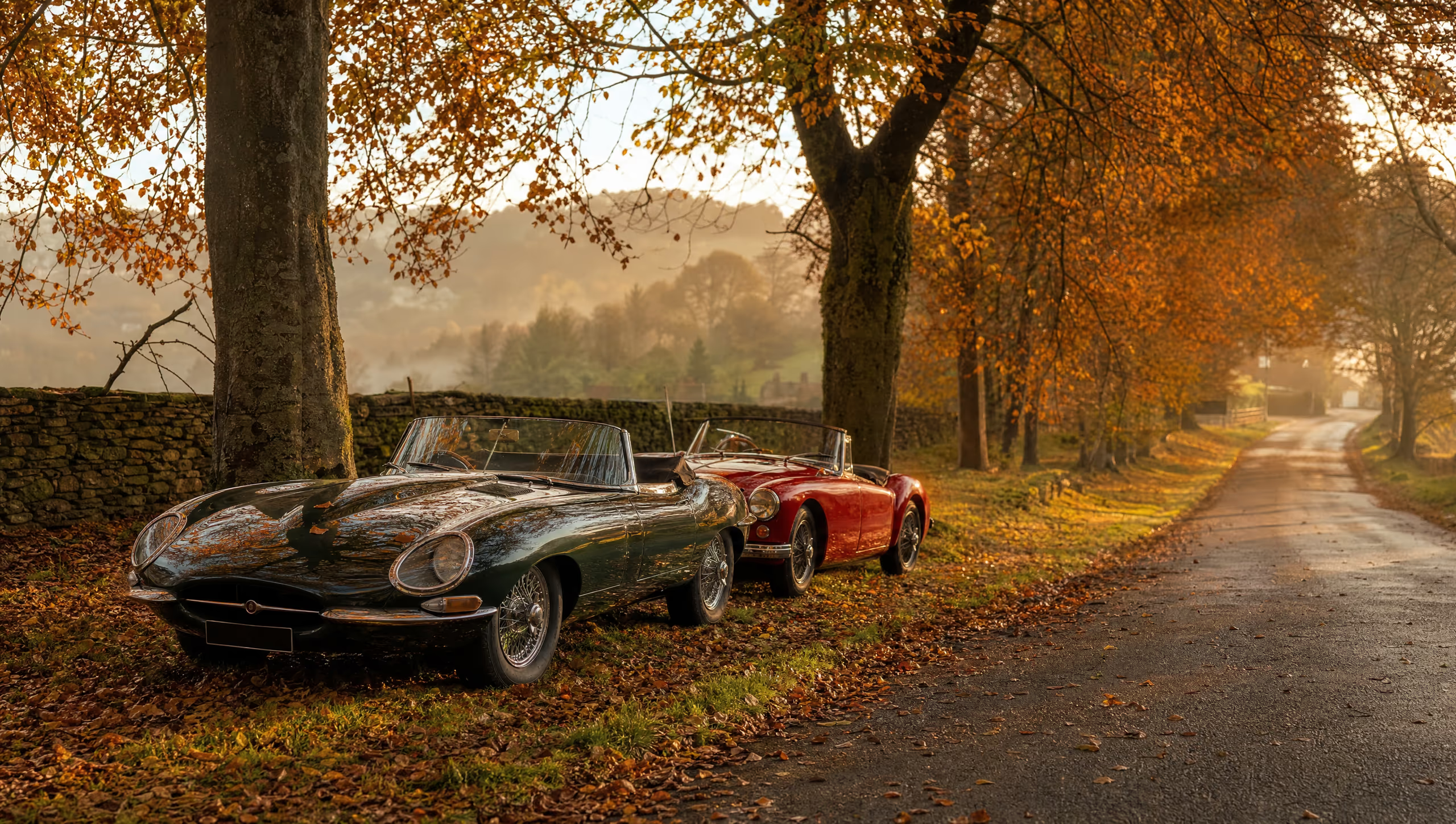
A 1967 Series I 4.2 roadster made £119,250 against an £80,000 to £100,000 estimate, comfortably clear of the guide. A period-modified Coombs Mk2 3.8 made £112,500 on the same £80,000 to £100,000 estimate. Another Mk2 3.8 with Coombs-style work made £63,000 against £45,000 to £55,000. That is three cars in a row beating their guides in the year everyone has spent telling you Jaguar is falling apart.
It was not universal. A Series 3 V12 commemorative roadster made £191,250 against £200,000 to £240,000, and a Series 1 3.8 Lightweight at £260,000 to £310,000 did not find a buyer. But the direction is unmistakable: honest, usable, well-known Jaguars in the five-figure and low six-figure bracket sold well, and often for more than expected. The trouble was concentrated at the top and among the cars that were never quite what they were dressed as.
Elsewhere the same shape repeated. A 2007 Porsche 997.1 GT3 RS made £241,875 against £175,000 to £200,000. A 1998 Aston Martin V8 Coupé made £83,250 against £55,000 to £65,000. A 1973 Lamborghini Jarama S made £49,500 against £35,000 to £45,000. Meanwhile a one-of-one Sonderwunsch 992.1 GT3 RS and a 2024 718 Spyder RS both went unsold. Modern collector Porsches that the market has already priced went cheap enough to tempt, and the halo cars sat there.
The lesson under the numbers
Four of thirteen above £200,000. Money was in the room, it just refused to be the greater fool. Buyers turned up at Silverstone with real appetite for cars they could check, and none at all for cars that needed a story told about them first.
If you are selling this autumn, price to what comparable cars have actually made rather than to the 2022 peak, and put the history file in front of people before they think to ask for it. Anything whose value rests on what it resembles rather than what it is will need patience. If you are buying, the top of the market is where the negotiating room now sits, which is a sentence I have not been able to write for several years.
What is coming over the bank holiday
The calendar picks up again almost immediately, and the August bank holiday weekend is unusually busy.
22 August, Southampton
The Barons MPC South sale runs at Marchwood from midday. Mixed, value-led, the sort of room where a project and a proper car share a marquee.
29 and 30 August, Silverstone
Iconic runs the Classic Sale at CarFest, and note the change: CarFest has moved from Laverstoke Park Farm in Hampshire to Silverstone for 2026, with the festival running 28 to 30 August and the auction based in The Wing. Around 120 entries are catalogued. If you only want the sale, the auction halls are reachable across the Hilton link bridge, though you will need a festival ticket to get into CarFest proper.
31 August, Oulton Park
Hampson's Gold Cup sale sits inside the HSCC's Gold Cup meeting, which runs 29 to 31 August and this year carries both a Brabham celebration and the Seaman Trophy for pre-war Grand Prix cars. Of the three, this is the one I would clear the diary for, whether or not you intend to bid.
September then arrives properly: Manor Park Classics at Runcorn on the 5th, Historics at Ascot and the Autumn Classic Festival at Castle Combe both on the 12th, Brightwells in Herefordshire on the 16th, and H&H at Kelham Hall on the 23rd. The full run through to Christmas is on our auctions page.
So the market gave its answer, and it was not the one I expected. Recreations need a confident room, and we have not got one at the moment. Original cars with their history straight are selling perfectly well, sometimes for more than anyone guided. If you have been waiting for the moment when a good E-type stops looking like a gamble, late July was probably it.
Welcome aboard. A confirmation is on its way to your inbox.
Share this article

Related Articles
Classic car events in October 2026: the last month before the covers go on
Two hills, a Formula Ford Festival with a hundred years of Brands Hatch behind it, ten auctions and a London Motor Week finish. October is shorter on fixtures than September and better for it.
Read More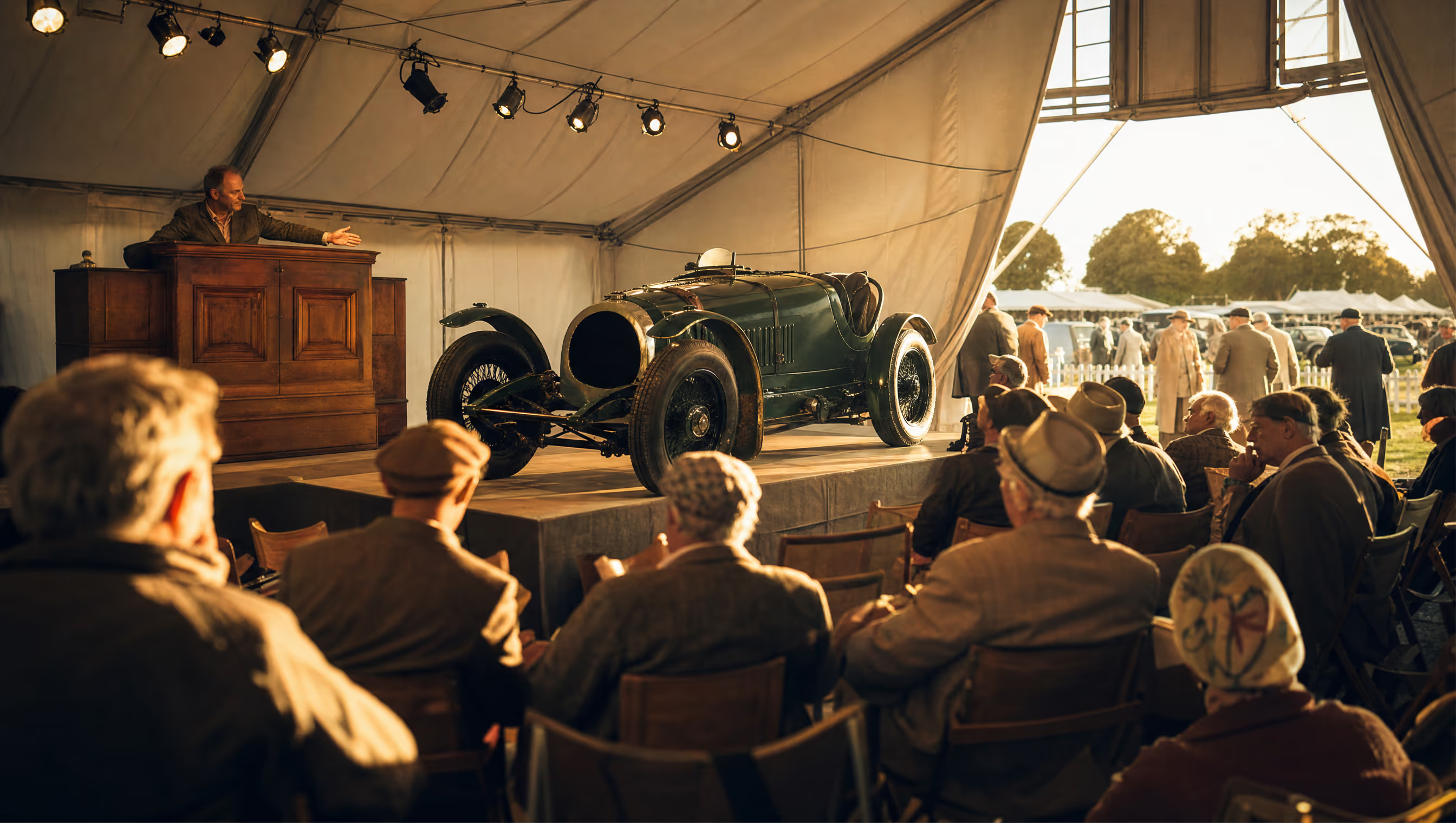
Goodwood Revival auction results 2026: three cars in four sold, and most of them sold cheap
Bonhams sold 72 of the 94 cars it offered at the Revival, a far better rate than last year. Look at the prices, though, and two thirds of them went for less than the low estimate. Here is how my four predictions fared.
Read More
Goodwood Revival auction 2026: the one sale that will tell us where the market is
Bonhams has folded its Festival of Speed sale into the Revival, so Saturday 19 September is its only Goodwood auction of 2026. Last year's Revival sale was the weakest since 2014. Here is what is in the catalogue and what I will be watching.
Read More