
Table of Contents
- The best customers you are not courting
- Parking comes first, and it is not negotiable
- Give them a room to talk in
- Staff who like cars, or can fake it convincingly
- The photograph does half your marketing
- The weekend away is the big prize
- How clubs actually choose venues
- Getting your venue in front of them
Every Sunday morning from March to October, small convoys of old cars leave driveways all over Britain and head somewhere. Sometimes it is a stately home with a lawn. More often it is a pub or a cafe that does a proper breakfast and does not mind forty MGs arriving at once. Somebody chose that destination, usually a club events secretary with a laptop and a deadline, and the venues that get chosen again and again are not always the grandest ones. They are the ones that understood what the club needed.
I spend a lot of time around the people who make these decisions, because this site lists nearly 800 clubs and the events they run. So here is an honest guide for the hoteliers, publicans and estate managers who would like some of this trade: what classic car clubs are actually looking for, and where they go to find it.
The best customers you are not courting
Start with why you should bother. A club visit is group business on your quietest days. Runs happen on Sunday mornings. Monthly meets happen on a Tuesday or Wednesday evening, in your dead midweek slot, ten months of the year. The members are mostly retired or close to it, they are not in a hurry, and they spend like people who have already paid off the mortgage. Lunch for thirty, a bar that stays busy all afternoon, and if you are a hotel, a block of rooms for the weekend.
And they are loyal to the point of stubbornness. A club that has a good day at your venue will put you on next year's calendar before they have left the car park. I know clubs that have held their Christmas dinner in the same hotel for twenty years. Win one properly and you have won an annuity.
Parking comes first, and it is not negotiable
Before a club looks at your menu, your function room or your lovely view, it looks at your car park. This is the whole audition.
A club run arrives as a convoy, which means ten to forty cars turning up within about twenty minutes of each other. They need to park together, because half the point of the day is standing around looking at each other's cars. Scattering them across a multi-storey defeats the object, and while we are on the subject, a height barrier is simply a sign reading "classics not welcome" that cost you more than a sign would have.
Hardstanding matters more than you would think. A field is fine in July and a disaster in April, and the owner of a 1935 Riley does not want to discover which one today is. Gravel is acceptable. Grass with a firm base is fine for shows. What clubs really love is a spot where the cars can be seen, a front lawn, a courtyard, the space directly outside the windows, because the cars are the show and everybody knows it, including your other customers, who will wander over with their phones out. Forty classics outside your pub is the best marketing your pub will get all year.
Give them a room to talk in
The club calendar is not all driving. There is the monthly noggin and natter, the AGM in January, the quiz night, the winter talk from a man who once rallied a Hillman Imp and has slides to prove it. All of it needs a room, ideally free or cheap on the understanding that thirty people will eat and drink while they are in it.
This is the trade most venues never think to ask for, and it is the stickiest. A club that holds its monthly meeting at your place is there twelve times a year, in the months when nobody else is booking anything. Offer a function room on a quiet Tuesday and you have a decent chance of becoming the club's home for a decade.
Staff who like cars, or can fake it convincingly
Clubs remember how they were treated long after they have forgotten what they ate. The venues with a reputation in the hobby, and word travels fast, are the ones where somebody came out to say hello, where the kitchen coped cheerfully with thirty covers arriving at once, and where nobody sighed when the car park filled with Triumphs.
You do not need petrolheads on the payroll. You need staff who have been told the club is coming, roughly when the convoy lands, and that these are guests to make a fuss of rather than a logistics problem. A reserved stretch of car park with a couple of cones out. Coffee ready on arrival. That is the entire trick, and remarkably few places manage it.
The photograph does half your marketing
Have a look at the venues clubs return to year after year: Beaulieu, Brooklands, Tatton Park, Goodwood. Grand names, but notice what they have in common. Old cars look magnificent in front of them.
Every club run ends with photographs, and those photographs end up in club newsletters, on club Facebook groups and in the galleries members bore their families with. If your venue is the backdrop, you are being advertised to exactly the audience you want, for nothing. A Georgian frontage, a lake, a cobbled yard, even a well-kept beer garden will do the job. When a club events secretary is choosing between two pubs with similar menus, the one that photographs well wins.
The weekend away is the big prize
The single most valuable booking in club life is the weekend away. Twenty cars, forty people, two nights, dinner both evenings, and they will drink your bar dry in the nicest possible way. Clubs plan these months ahead and repeat the good ones annually.
To win them as a hotel you need secure overnight parking, and I mean actually secure, not "round the back near the bins". These are cherished cars, some of them worth more than the rooms cost to build, and their owners will quiz you about the parking before anything else. Get that right, add a private dining room and a scenic hour's drive in any direction, and you are most of the way there. The Peninsula in London treats arriving classics as honoured guests rather than a parking problem, and it is no coincidence that the car people talk about it constantly.
How clubs actually choose venues
Here is the part venue owners consistently get wrong. Clubs do not find venues through your advertising. They find them through other clubs. An events secretary planning next season asks around, looks at where similar clubs went, scrolls the event listings, and checks a shortlist against the two questions that matter: can we park together, and will they be pleased to see us?
Which means the way to get chosen is to be visible in the places where that planning happens, with the right information in front of the right person. Not a billboard. Not a wedding brochure. A page that says, plainly: yes, we welcome clubs, here is the parking, here is the room, here is who to call.
Getting your venue in front of them
That is exactly what our venues directory is for. It lists the hotels, historic houses, circuits and showgrounds across the UK that welcome classic car clubs properly, and clubs use it to plan runs, shows and weekends away. Each venue gets its own page setting out what visiting clubs can expect, alongside the events held there.
If your venue welcomes clubs, or would like to start, you can have your own page in the directory for £395 a year through our advertising page. We write and build the listing for you, feature you in the monthly newsletter, and put your club friendly dates in our events coverage. The clubs are already here, planning next season. The only question is whether they can find you.
Welcome aboard. A confirmation is on its way to your inbox.
Share this article

Related Articles
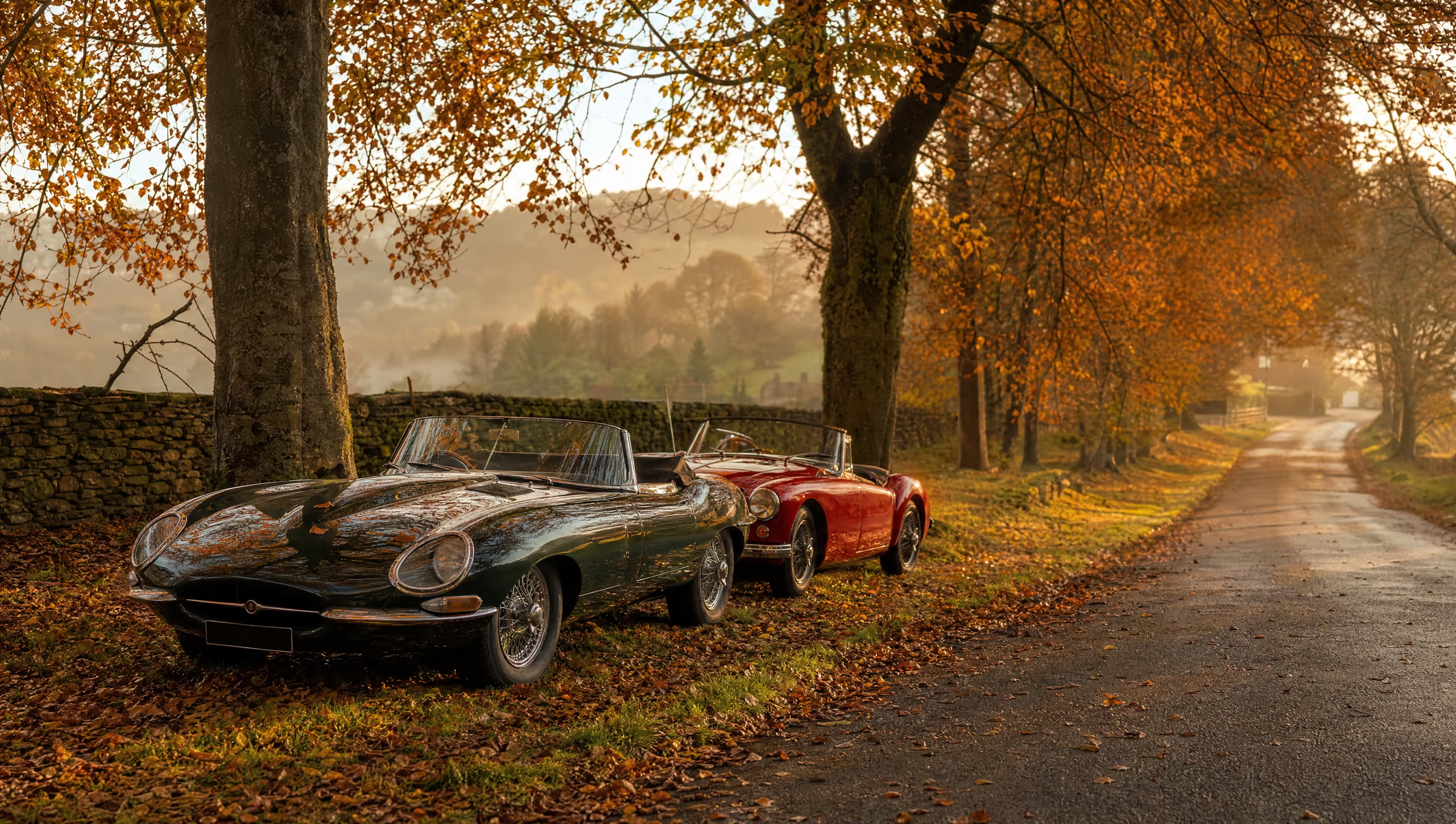
Classic car events in October 2026: the last month before the covers go on
Two hills, a Formula Ford Festival with a hundred years of Brands Hatch behind it, ten auctions and a London Motor Week finish. October is shorter on fixtures than September and better for it.
Read More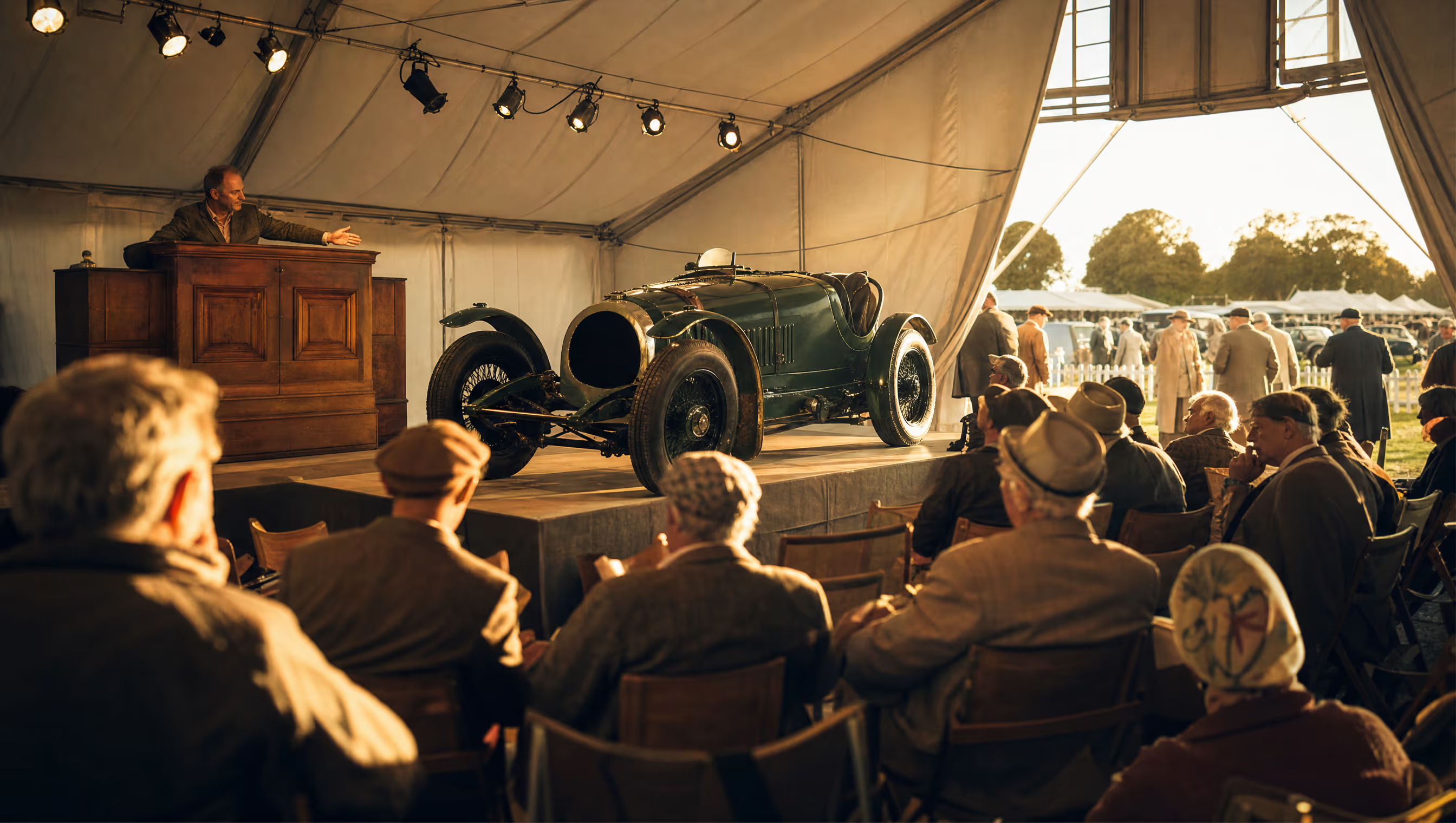
Goodwood Revival auction results 2026: three cars in four sold, and most of them sold cheap
Bonhams sold 72 of the 94 cars it offered at the Revival, a far better rate than last year. Look at the prices, though, and two thirds of them went for less than the low estimate. Here is how my four predictions fared.
Read More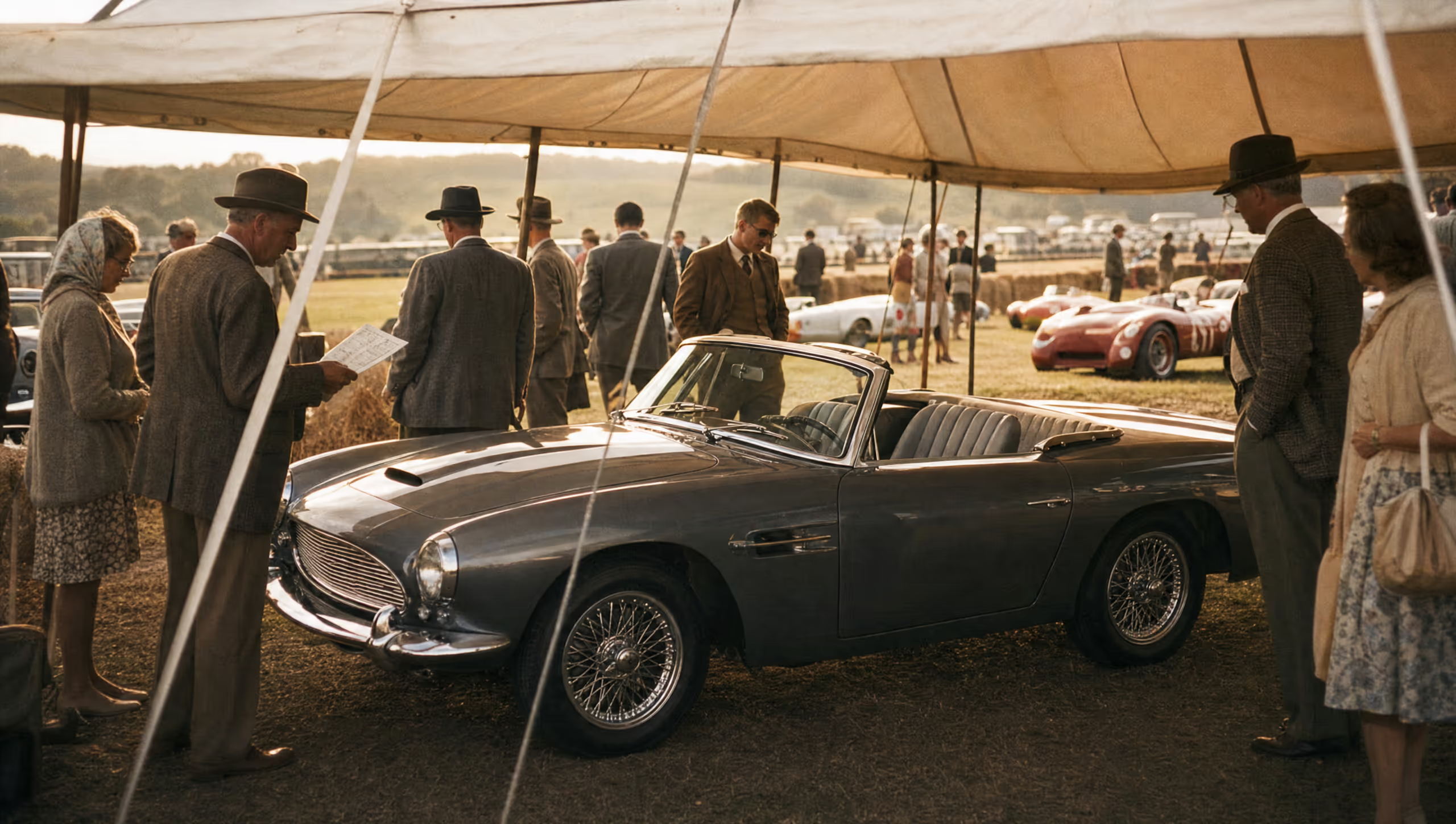
Goodwood Revival auction 2026: the one sale that will tell us where the market is
Bonhams has folded its Festival of Speed sale into the Revival, so Saturday 19 September is its only Goodwood auction of 2026. Last year's Revival sale was the weakest since 2014. Here is what is in the catalogue and what I will be watching.
Read More